
Key Takeaways
- Careful routing reduces mechanical stress, abrasion, and premature wear during repeated robotic movement.
- Separating power and signal lines helps protect data transmission and maintain stable system performance.
- Regular checks of high-motion areas, connectors, and protective coverings can prevent unexpected stoppages.
- Selecting cables for movement, temperature, space, and operating conditions supports longer service life and predictable maintenance
Introduction
As Singapore manufacturers expand robotics across electronics, mobility, aerospace, and industrial production, reliability depends on more than the robot and its controls. Cables carry the power, data, and control signals behind every movement. Repeated motion exposes them to stress, so poor robot cable management can cause abrasion, signal instability, and avoidable stoppages. Careful planning protects uptime and component life.
What Is Robot Cable Management?
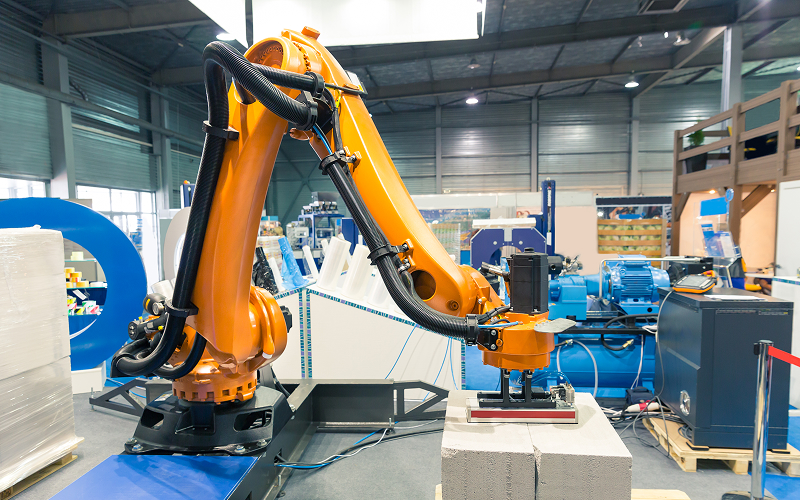
Robot cable management covers the routing, support, and protection of cables throughout a robotic installation. Unlike static wiring, robotic cables must move across several axes without excessive bending, twisting, rubbing, or pulling at connection points. A suitable arrangement may combine high-flex cables, carriers, clamps, strain relief, and protective sheathing selected for cycle frequency, space, and operating conditions.
Effective industrial robot cable routing begins with reviewing maximum reach, wrist rotation, tooling movement, and emergency-stop behaviour. Engineers can then set bend radii, controlled slack, and support points while keeping cables clear of sharp edges, heat sources, tooling, and machinery. Early planning also simplifies inspection and replacement.
Why Proper Cable Management Is Critical
Cable movement directly influences process stability and equipment availability. When robot cable management is overlooked, cables may drag, bunch around joints, or experience uneven tension. These conditions can weaken jackets, shielding, and conductors, potentially stopping a robot or creating intermittent faults that take time to diagnose.
The value becomes clearer when routing decisions are assessed against service life, signal stability, and maintenance requirements.
Preventing Mechanical Stress and Damage
Robotic joints create concentrated flexing and torsion in high-motion areas. Bending below the specified radius, clamping too tightly, or allowing cables to carry unsupported weight concentrates stress within a short section. Over-restraint can be as damaging as insufficient support because cables need to flex within controlled limits. A high-flex cable with suitable flex-life, torsional performance, shielding, and jacket properties helps reduce fatigue, cracking, and premature replacement.
Maintaining Signal Integrity and Performance
Robots depend on accurate feedback from encoders, sensors, vision systems, and networked controllers. Routing signal lines beside high-current power cables may increase electromagnetic interference when shielding, grounding, or separation is inadequate. Effective cable management for automation systems separates incompatible circuits, preserves shielding continuity, and limits movement at connectors. This supports repeatable motion, stable sensing, and dependable control.
Supporting Safer and More Efficient Operations
Organised cable runs improve maintenance access and workplace safety. Loose loops may catch on moving components, obstruct service areas, or become disconnected during inspection. Clearly routed and labelled assemblies help technicians identify circuits, examine wear points, and replace components without disturbing unrelated connections. This is valuable in Singapore facilities with limited space and maintenance windows.
Common Faults in Robot Cable Assemblies and How to Prevent Them
Cable faults often develop gradually as cycles accumulate or conditions change. Recognising the main failure modes allows teams to intervene before reliability, safety, or output is affected.
1. Cable Wear and Mechanical Fatigue
Repeated movement gradually fatigues conductors and insulation. High-motion zones should be checked for flattening, abrasion, kinks, discolouration, or reduced flexibility. Improving robot cable management may involve repositioning clamps, correcting bend radii, adding a carrier, or changing to a high-flex construction. Inspection intervals should reflect cycle count, motion severity, and observed wear.
2. Signal Interference and Electromagnetic Disruption
Welding systems, motors, drives, and high-current conductors can introduce electrical noise into communication lines. Shielded cables, grounded terminations, suitable separation, and appropriate crossing angles help limit interference. Signal and power cables should not share an uncontrolled bundle. Demanding installations may also require filters or additional shielding.
3. Connector Failure and Contact Degradation
Connectors face vibration, dust, moisture, repeated handling, and movement near termination points. Contacts may loosen, seals may deteriorate, and contamination or corrosion may cause intermittent connections. Checks should cover locking mechanisms, pin alignment, cleanliness, sealing, and strain relief. Connector materials and seals should suit humid facilities and processes involving coolants or chemicals.
4. Thermal Damage in High-Temperature Environments
Welding, heat treatment, foundry work, and some machining processes expose cables to radiant heat, sparks, or hot surfaces. Excessive temperatures accelerate jacket ageing and may alter electrical properties. Heat-resistant constructions, sleeves, barriers, ventilation, and greater routing distance can reduce exposure. Cable durability in robotic systems should be assessed against continuous temperatures and short thermal peaks rather than ambient temperature alone.
5. Incorrect Cable Length and Routing
Excess cable can sag, whip, twist, or catch during motion. Insufficient length can pull on connectors, restrict reach, or overload conductors. Engineers should verify length across the full movement envelope through slow-speed commissioning. The installation needs controlled slack without unnecessary free length. Routing should be reviewed after changes to tooling, reach, payload, or cycle path.
Building More Reliable Robotic Systems Through Better Cable Management
Reliable automation treats cables as engineered motion components rather than passive wiring. A strong robot cable management programme combines correct specification, route planning, environmental protection, documented standards, and condition-based inspection. Longer service intervals and fewer premature replacements help manufacturers use maintenance resources and materials more efficiently.
In electronics production, electronic part manufacturers depend on stable power and signal transmission for repeatable assembly, testing, and inspection. Selecting and routing cables with the same care as control hardware helps protect process consistency.
In machining environments, machining parts manufacturers may need to account for vibration, coolant exposure, metal debris, and movement. Coordinating cable construction with connectors and protective components can reduce wear and support more predictable maintenance.
Proterial Asia Pacific develops high-performance materials for mobility, industrial infrastructure, and electronics, including industrial robot cables engineered for repeated bending and twisting. Our range includes options for restricted spaces, torsional movement, low-dust environments, heat exposure, and oil resistance.
Contact us to discuss a cable solution suited to your robot’s movement, installation environment, and performance requirements.
 Proterial Asia