
Key Takeaways
- Material choice affects the package. Conductivity, strength, formability, and corrosion resistance must align.
- Heat control is becoming harder. Higher power density demands efficient thermal pathways.
- Reliability is cumulative. Repeated thermal, mechanical, and environmental stresses expose weak choices.
- Application context comes first. Geometry, processing, conditions, and service life should guide selection.
Introduction
Lead frames may receive less attention than the semiconductor die, but they perform several essential roles at once. They support the chip, create electrical paths, and help transfer heat away from active areas. Choosing lead frame materials therefore affects processability, electrical efficiency, thermal stability, package integrity, and service life across package designs.
We treat lead frame structure and function as one engineering problem. The frame must remain accurate through forming and assembly while supporting bonding, encapsulation, and connection. It forms part of the broader system of electronic packaging materials, where interfaces can affect package performance. You need to assess how these properties interact rather than focus on one datasheet value.
Why Lead Frame Materials Matter for Device Performance
Semiconductor packages are becoming smaller while carrying greater power demands. Less space means less room to manage heat, current density, and stress. The frame moves current, carries signals, spreads heat, and maintains geometry. Strong conductivity limits resistive loss, while effective heat transfer helps protect the die from damaging temperatures.
Material selection involves trade-offs. Alloying for strength may influence conductivity or formability. Even a conductive material can be unsuitable if it cannot hold forming tolerances. We assess the package as a system. Die size, current, lead geometry, joining, plating, service temperature, and reliability targets should shape the specification together.
Key Properties of Lead Frame Materials
No single property determines performance. We evaluate electrical, thermal, mechanical, environmental, and manufacturing behaviour together because gains in one area can create trade-offs elsewhere.
Thermal Conductivity
Heat from the semiconductor junction must move efficiently. Copper and selected copper alloys can combine high thermal conductivity with good processability. In higher-power devices, faster heat spreading helps reduce localised hot spots and thermal gradients, supporting stable conditions around the die and adjoining materials.
Electrical Conductivity
The frame is a conductive network for power and signals. Low resistance supports efficient current flow and stable performance. Copper-based solutions are common where conductivity matters, but current density, dimensions, plating, bonding compatibility, and mechanical requirements should influence which composition best suits the package.
Mechanical Strength
Strength helps the frame retain geometry during stamping, forming, handling, die attachment, encapsulation, and assembly. A soft material may deform; excessive brittleness can increase cracking risk. A balanced strength-formability profile supports accurate positioning where fine features and narrow tolerances leave little room for variation.
Corrosion Resistance
Humidity, oxygen, storage conditions, and process chemicals can affect metal surfaces. Corrosion may increase resistance, weaken interfaces, or interfere with joining. Alloy composition, surface treatment, and plating matter. For devices expected to operate for years, stable surface performance becomes a core reliability requirement.
Formability
Fine-pitch packages require intricate geometries produced consistently at volume. Good formability supports bends, thin sections, and precise features without excessive springback, cracking, or distortion. In electronics component manufacturing, predictable forming supports tooling consistency, process control, and yield as dimensions become more demanding.
How Lead Frame Materials Affect Reliability
Reliability depends on how the material responds to repeated thermal, mechanical, and environmental stresses. We assess behaviour through manufacturing, storage, assembly, and the intended operating life.
Withstanding Thermal Cycling
Package materials expand and contract at different rates as temperatures change. During thermal cycling in semiconductors, mismatches can create stress within the frame and bonded interfaces. Dimensional stability helps limit warpage and fatigue, reducing the chance that repeated temperature changes weaken connections or disturb package geometry.
Managing Mechanical Stress
Stamping, bending, reel handling, assembly pressure, and product use impose mechanical loads. The frame must resist misalignment or cracking. Experienced metal components manufacturers consider temper, thickness, grain behaviour, forming direction, tooling interaction, and finished geometry rather than relying on nominal strength alone.
Preventing Oxidation and Environmental Degradation
Moisture, contaminants, chemicals, and elevated temperatures can alter metal surfaces. Protective plating and suitable alloy design help manage oxidation and corrosion. Surface stability supports reliable electrical contact, bonding quality, and structural performance through storage, manufacturing, and service.
Reducing the Risk of Electromigration
Sustained high current density can move metal atoms along a conductive path. Over time, voids or material accumulation may increase failure risk. Good conductivity, stable metallurgical characteristics, suitable cross-sectional design, and controlled temperatures help reduce electromigration risk.
Ensuring Consistent Long-Term Performance
A reliable package depends on interactions among the frame, die, bond system, encapsulant, plating, and environment. A material stable under combined stresses helps preserve electrical continuity and mechanical integrity. For any parts manufacturing company, selection should reflect lifecycle requirements, not only initial cost or processing convenience.
Role in Thermal Management and Heat Dissipation
The lead frame can form part of the package’s thermal pathway, carrying heat from the die and spreading it over a larger area. Selecting suitable lead frame materials helps improve heat transfer while supporting stable package performance. Efficient transfer reduces hot spots and stabilises junction temperatures. This is especially important in automotive electronics, power modules, and industrial systems exposed to sustained loads.
Singapore’s Applied Materials–A*STAR-IME Centre of Excellence in Advanced Packaging focuses on materials, equipment and process technologies for hybrid bonding and emerging 3D chip integration. For suppliers, this reinforces the need to assess thermal pathways during package design and qualification.
How Proterial Supports High-Performance Lead Frame Solutions
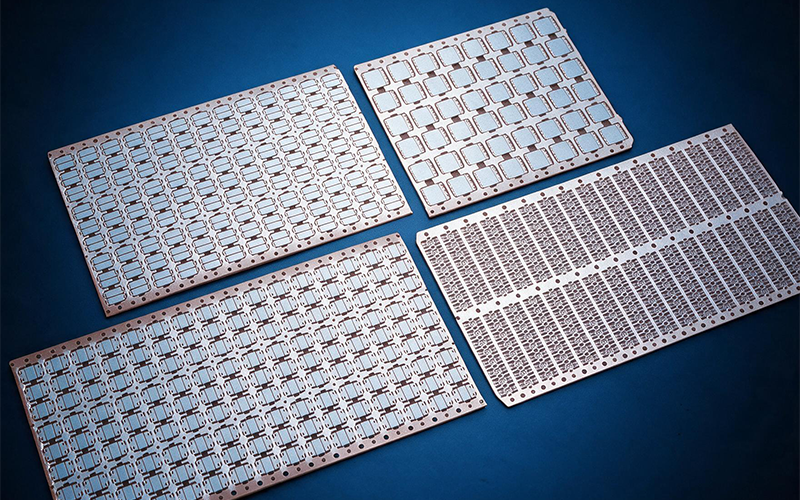
At Proterial, we match copper strip characteristics to different lead-frame applications. C194 offers high strength and heat resistance with excellent electroplatability, etchability, and pressability, while HCL-12S combines high heat resistance with high electrical conductivity. Our dual-gauge copper strips suit varied shapes, including power transistors, LEDs, and automotive inverter modules.
If you are evaluating a new package or preparing for higher power density, bring material decisions into the project early. Share your current geometry, processing, and reliability requirements with our team. We can assess trade-offs against your manufacturing requirements so the selected solution supports stable production and dependable performance.
 Proterial Asia