
Key Takeaways
- Pure aluminium is lightweight, corrosion-resistant, conductive and easy to form, making it suitable for lower-stress applications or components requiring substantial forming.
- Adding elements such as magnesium, silicon, copper or zinc can improve strength, hardness, durability and processing characteristics.
- Material suitability depends on load requirements, exposure conditions, manufacturing methods, service life and total lifecycle value.
- The selected grade should meet the component’s requirements without introducing unnecessary cost, weight or overall processing complexity.
Introduction
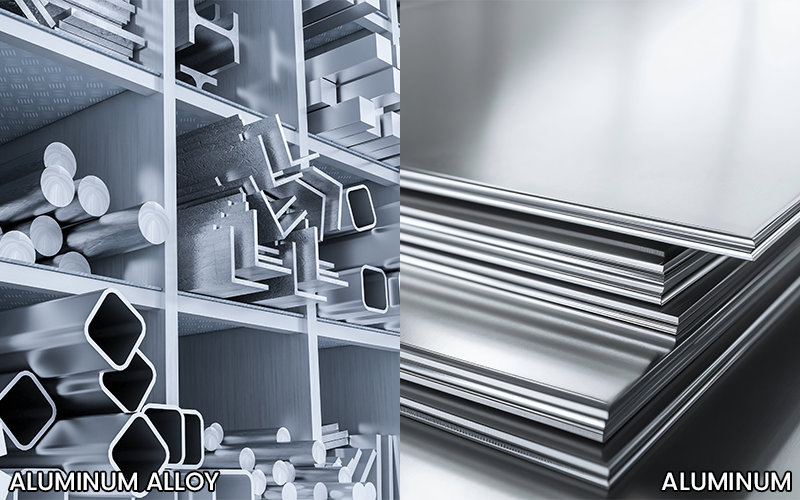
In materials science, aluminium and aluminium alloys are sometimes treated as interchangeable, although they are not the same material. Aluminium is the base metallic element, while commercially pure grades contain only small amounts of other elements. Aluminium alloys incorporate selected elements to modify particular properties. Understanding aluminium vs aluminium alloy helps engineers and manufacturers choose materials according to strength, processing needs, environmental exposure and expected service life.
What is Aluminium?
Aluminium is valued for its low weight, corrosion resistance, conductivity and formability. It can be rolled, bent and shaped efficiently, making it suitable for packaging, window frames, electrical conductors, heat exchangers and lightweight panels. In an aluminium vs aluminium alloy comparison, commercially pure aluminium is generally preferred when conductivity, easy forming or corrosion resistance under moderate exposure conditions matter more than high structural strength.
What is Aluminium Alloy?
Aluminium alloys combine aluminium with controlled amounts of elements such as copper, magnesium, silicon, zinc or manganese. These additions can improve tensile strength, hardness, machinability, weldability and durability. Their enhanced mechanical performance makes them suitable for aircraft structures, marine equipment, electronic housings and precision-engineered parts. They are also widely used in automotive products that must remain lightweight while withstanding demanding operating conditions.
Key Differences Between Aluminium and Aluminium Alloy
Material suitability depends on more than weight. Composition, strength, corrosion behaviour and manufacturing requirements all influence performance in the intended application.
1. Composition
Commercially pure aluminium contains only small amounts of other elements, helping preserve its conductivity, ductility and corrosion resistance.
An aluminium alloy contains deliberately selected elements that alter its properties. Composition is the starting point for understanding aluminium vs alloy differences, as each grade is engineered to provide a defined balance of strength, workability and environmental resistance.
2. Strength and Hardness
Pure aluminium is relatively soft and ductile. It forms easily but may deform under heavy loads, repeated stress or demanding operating conditions.
Many aluminium alloys can provide greater strength and hardness than commercially pure grades, depending on their composition and temper. Suitable heat treatment may also improve tensile strength, fatigue resistance and wear resistance. For metal component manufacturers, these properties are valuable when producing structural and precision parts exposed to repeated loading or wear.
3. Corrosion Resistance
Aluminium naturally develops a protective oxide layer when exposed to air, helping it resist corrosion in many indoor and general-use environments.
Its alloys can also provide strong corrosion resistance, although performance varies by grade and alloying element. Some grades are selected for outdoor or marine exposure, while others may require anodising, coating or careful joint design and compatible material pairings. When assessing aluminium vs aluminium alloy, Singapore businesses should consider humidity, chemical exposure and maintenance requirements.
4. Weight and Density
Both aluminium and its alloys are lighter than many commonly used steels. This supports weight reduction in transport, electronics and industrial equipment, where lower mass may improve energy efficiency or handling.
Compared with commercially pure grades, suitable aluminium alloys can provide a higher strength-to-weight ratio while retaining relatively low density. Engineers can therefore reduce component weight without compromising the strength required for vehicles, machinery or structural applications.
5. Workability and Formability
Pure aluminium is generally easier to roll, bend, draw and shape, making it suitable for simple forms or applications requiring high ductility.
Aluminium alloys vary in their response to different fabrication processes. Different grades are selected for extrusion, sheet forming, welding or machining, while heat-treatable grades may achieve higher strength after controlled thermal processing. For a parts manufacturing company, selection must account for the production method as well as the component’s required performance.
Aluminium vs Aluminium Alloy: Which to Choose
A comparison of aluminium vs aluminium alloy should begin with the component’s primary function. The required property balance can then be matched to a suitable grade and manufacturing route.
Consider the Operating Environment
Pure aluminium may be sufficient for indoor, low-stress applications where conductivity, corrosion resistance or easy forming is the main priority.
An aluminium alloy may be more suitable when a component faces elevated temperatures, vibration, moisture, chemical exposure or repeated loads. Before selecting a grade, engineers should assess the component’s expected service life alongside the relevant thermal, environmental and loading conditions.
Balance Cost with Performance Needs
Pure aluminium may be cost-efficient for simple applications where easy processing is a priority. However, insufficient strength may lead to deformation, wear or premature replacement.
The most appropriate grade is not necessarily the one with the lowest initial material price. When comparing aluminium vs aluminium alloy, businesses should consider fabrication costs, maintenance, reliability and total lifecycle value. Material efficiency, service life and end-of-life recovery should also be considered where they form part of the project’s environmental objectives.
Making the Right Material Choice with Proterial
Proterial supports customers across mobility, industrial infrastructure and electronics with high-performance materials and components suited to technically demanding uses.
Speak with us about your current application, operating conditions and technical priorities. We can help you evaluate suitable material options against your performance, production and lifecycle requirements.
 Proterial Asia